

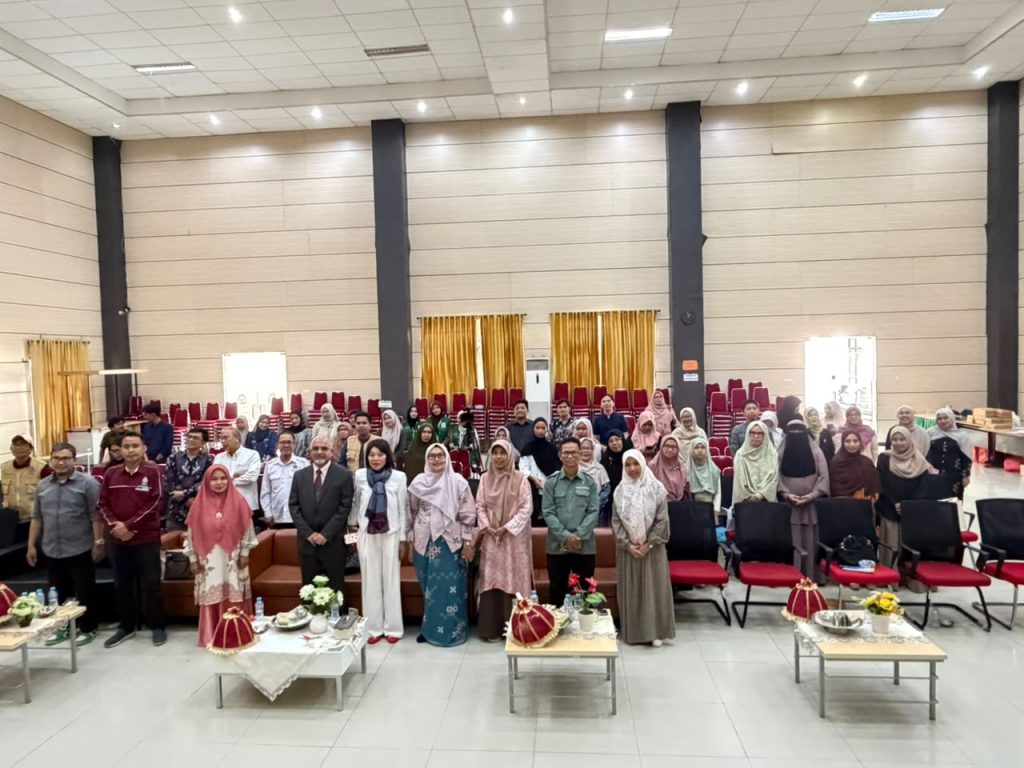
On August 13, 2026, UIN Alauddin Makassar held an international seminar titled “International Halal Standards Harmonization, Challenges, and Global Market Access.” The seminar discussed challenges in harmonizing halal standards across countries, as well as opportunities to develop halal products and expand their access to the global market. The event was conducted in a hybrid format, with the onsite session taking place at the Hall of Islamic Economics and Business, UIN Alauddin Makassar, and the online session held via Zoom Meeting.
The event began with an opening speech by Dr. Cut Muthiadin, S.Si., M.Si., Head of the Halal Inspection Agency (LPH) of UIN Alauddin Makassar. In her remarks, she emphasized the importance of developing the halal industry by not only focusing on halal compliance but also on quality, safety, innovation, and sustainability. She also encouraged stronger collaboration among universities, industries, governments, and international organizations.
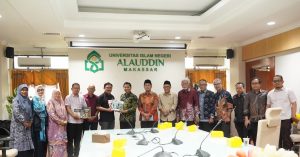
The seminar was moderated by Dr. Khaerani Kiramang, S.Pt., M.P., and featured three speakers from different countries. The first speaker, Dr. Saeed Akhtar, Director of NAHA, Chiba, Japan, attended the event in person. Meanwhile, K.H. Mifhatul Huda, Lc., Secretary of the Fatwa Commission of the Indonesian Ulema Council (MUI), and Mr. Mun Tae Gon, Director of the Overseas Export Support Center at Foodpolis Korea, joined the seminar online via Zoom Meeting. The event was also attended by Ms. Serliah Nur, Head of the International Office of UIN Alauddin Makassar.
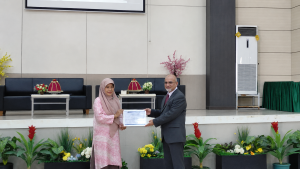
In his presentation, Dr. Saeed Akhtar discussed challenges arising from differences in halal standards across countries, particularly in certification systems, accreditation, and technical requirements. He explained that these differences could create confusion for businesses seeking to enter the international market. Therefore, he emphasized the need for harmonization and mutual recognition so that halal certification could be more widely accepted.
Dr. Saeed Akhtar also emphasized that halal standards should remain based on the primary sources of Islamic teachings, namely the Qur’an and Sunnah. “Do not make the halal standard according to your liking and disliking. Make it according to the Quran and Sunnah,” he stated. He encouraged countries to ensure that differences in their respective systems did not become obstacles to establishing halal standards that could be more widely accepted worldwide.
Meanwhile, K.H. Mifhatul Huda, Lc., discussed several issues arising from differences in halal standards between countries, including requirements for raw materials, production processes, certification validity periods, and product traceability. He emphasized the importance of harmonizing standards and establishing mutual agreements to ensure that halal certification and production chains could be properly traced in international trade.
The third speaker, Mr. Mun Tae Gon, discussed the importance of international halal standards harmonization in reducing differences between countries, increasing trust in halal products, and facilitating access to global markets. He also presented the food industry ecosystem in South Korea, particularly through Foodpolis and the Food Industry Promotional Agency of Korea (FIPA), which provided support for businesses through production facilities, food quality and safety testing, technology development, training, marketing, and business assistance. In the context of Indonesia-South Korea relations, the discussion also highlighted opportunities for cooperation through knowledge and technology exchange, human resource capacity building, service digitalization, standards harmonization, and the expansion of international market access.
The seminar was expected to broaden participants’ understanding of the challenges of halal standards harmonization while creating opportunities for collaboration in developing the halal industry at the global level. Through this forum, UIN Alauddin Makassar also strengthened its international network and supported the development of a competitive and sustainable halal ecosystem with greater access to markets worldwide